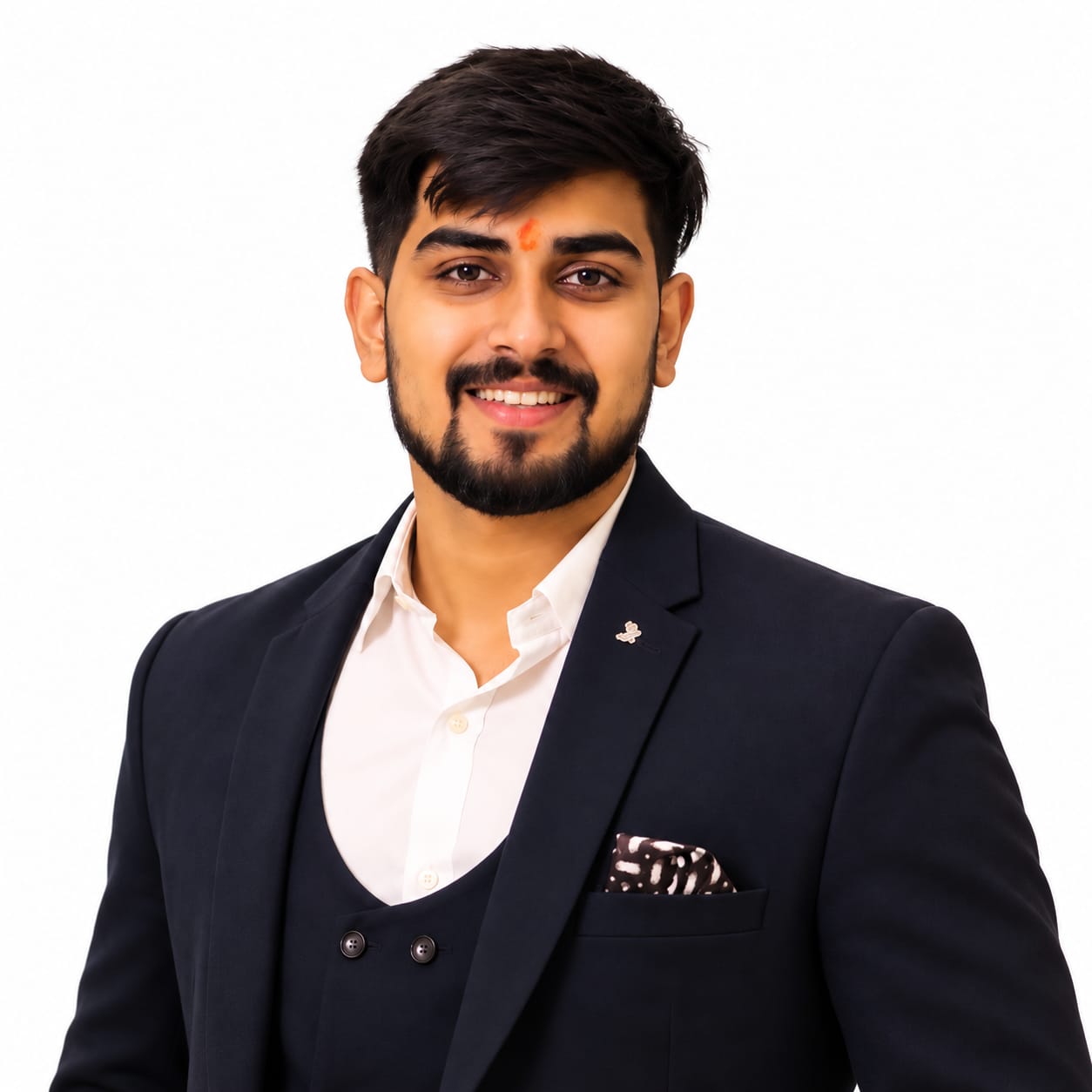
Verified · Woman tutor
Neeta Anand
In Maharashtra
Mumbai, Thane
- Experience
- 13+ yrs
- Fee
- ₹1,500/hr
CBSE tutors who make NCERT chapters stick and keep board answers in CBSE's own style, in a city of State Board neighbours.
 Guide by Abhinandan Tiwary with Aaditya Kashyap · Maths tutor · Class 10 CBSE and ICSE specialist
Real tutors first; sample profiles are marked. We suggest suitable tutors, and you meet one at a free demo class.
View all tutors →In Maharashtra
Mumbai, Thane
In Maharashtra
Mumbai
Teaches Maths · Science
In Maharashtra
Mumbai
Teaches Maths · Science
In Maharashtra
Mumbai
Teaches Physics
In Maharashtra
Pune
Teaches Biology
In Maharashtra
Mumbai
In Maharashtra
Chhatrapati Sambhajinagar (Aurangabad), Chhatrapati Sambhaji Nagar
Teaches Biology · Chemistry · Science
In Maharashtra
Hadapsar, Kondhwa & NIBM, Pune
Teaches Science
Tutors who join go through an ID check. Tell us the class, board and your area: we share two or three matched tutors, each with their fee, and the first class is a free demo, at home or online.
Book a free demo classAcross NXTutors, most home-tuition sessions fall between ₹800 and ₹2,500 an hour; Classes 11–12, IB/IGCSE and JEE/NEET sit toward the upper end; specialists for IB HL or JEE Advanced can charge more. Tutors set their own fee, and you see each tutor's fee before the demo class.
Monthly example: 3 one-hour classes a week ≈ ₹9,600–₹32,500 a month (12–13 classes at ₹800–₹2,500 an hour). An example, not a quote: your tutor's own fee decides the real figure.
See a monthly example and why one-to-one tuition costs more →
NXT AI can make mistakes. Please verify important details. Continue on WhatsApp
In Kolhapur, a CBSE student often lives next door to State Board families, studies with friends who sit the SSC, and sometimes shares a house with a brother or sister on the other board. That makes it easy to borrow the wrong habits: answers shaped for one paper, revision timed for another. Tuition pays off for a CBSE child when the tutor has a clear brief: NCERT chapters genuinely understood, CBSE's competency questions practised in its own style, and full written answers kept in shape right up to Class 12. Below you will find the CBSE route year by year, the 2026–27 changes for Classes 9 and 10, the senior marking split, and practical notes on getting a tutor to your part of Kolhapur. Abhinandan Tiwary, who teaches Class 10 maths for CBSE and ICSE, wrote the Class 10 maths notes; Aaditya Kashyap, who teaches science for both boards, wrote the science notes.
Kolhapur families follow the Maharashtra State Board, CBSE or ICSE, depending on the school. We have no reliable figures for how many follow each, so we do not guess. For tuition, the useful point is how differently CBSE and the State Board build their Class 10 papers, even where the subject names match.
| Point | CBSE | State Board SSC |
|---|---|---|
| Paper shape in maths and science | One 80-mark paper per subject, with 20 marks assessed in school | Each subject split into two 40-mark parts, with 20 internal marks |
| Social science | One subject paper | Two 40-mark papers, History and Political Science, and Geography, plus 20 internal marks |
| Question style | Roughly half the questions built on cases, data and real situations | The board's own formats, such as reasons, activities, maps and graphs |
| Textbooks | NCERT | The state's own textbooks |
Someone who has taught only one of these boards needs to prove, in the demo, that they understand how the other one marks. Our Maharashtra Board tutors in Kolhapur page reads the State Board schemes in detail.
In areas such as Apte Nagar, many households have two school-going children, and the two are not always on the same board. One tutor can often serve both, but only if the plan respects each paper. Three arrangements work:
Whatever the arrangement, tell the tutor which textbook each child uses, and ask for each child's work to be kept in a separate file. A CBSE child gains nothing from SSC-style activity questions, and an SSC child should not be memorising NCERT wording their own board does not use.
| Years | Exam | Typical gap | Tutor's focus |
|---|---|---|---|
| Classes 6–8 | School exams | Fractions, signed numbers, careful reading of science text | Basics rebuilt, working shown on paper |
| Class 9 | School exam: 80 written, 20 internal | Algebra and science get harder together | Short chapter tests; whether to take the Advanced paper |
| Class 10 | Board exam: 80 written, 20 from school | Case questions and complete written answers | Official sample papers, marked to CBSE's scheme |
| Class 11 | School exams | A sharp jump in physics, chemistry and maths | Secure foundations for the board year |
| Class 12 | Board exam, theory plus practical or internal | Whole-syllabus revision beside entrance work | One calendar that serves both |
The pass mark in each Class 10 subject is 33%. When algebra suddenly feels hard in Class 9, the real cause is usually older: fractions or simple equations that never settled. Middle-school tuition should mend those first.
All Class 9 students write the same 80-mark maths paper and the same 80-mark science paper. A student can also opt for an Advanced paper, worth 25 marks, in maths, in science, in both, or in neither. It is made entirely of higher-order questions on additional content, its marks are kept out of the aggregate, and a score of 50% or above is recorded on the marksheet. The split between Basic and Standard maths is coming to an end: the 2026–27 Class 10 batch is the final one to sit it. In maths, choose Advanced only if your child already likes the subject, never as a fix for weak marks.
Class 10 also has two board examinations now. Everyone sits the first. Students who pass it can take the second to raise their marks in as many as three subjects from science, mathematics, social science and languages. Plan as though the first is the only exam; the second is insurance.
| Subjects and codes | Written paper | Other component |
|---|---|---|
| Physics 042, Chemistry 043, Biology 044 | 70 | Practical, 30 |
| Mathematics 041 or Applied Mathematics 241 (only one) | 80 | Internal assessment, 20 |
| Accountancy 055, Business Studies 054, Economics 030 | 80 | Internal assessment, 20 |
The Class 12 board paper spans the full Class 12 syllabus, and each year's sample paper confirms the design, so the tutor should be using this year's copy. For physics in the board year, read our Class 12 physics strategies. Students preparing for entrance tests on the same chapters can see JEE and NEET home tutors in Kolhapur.
Roughly half of every CBSE secondary paper tests competency. The question begins with a short case, a source, a set of figures or an everyday situation, and asks the student to use an idea on it. A child can know the chapter thoroughly and still drop marks, because the reading comes first and is often rushed. A routine that works in science: mark the given facts, write the name of the concept they point to in the margin, and only then answer. In maths, it means writing the equation from the words before any arithmetic. Practise with NCERT exemplar problems and CBSE's published sample papers; ordinary worksheets seldom match the style. A child used to the short SSC-style questions a sibling or friend brings home may need extra time to build patience with long question stems.
In Classes 9 and 10, two moderate sessions in a week tend to achieve more than a single long one. Each session should move through three steps. First, the errors from the most recent school test, corrected from the NCERT explanation rather than a shortcut. Next, one new idea, practised through the textbook exercise and then an exemplar or case question. Last, one answer written out completely and checked for steps, units, diagrams and layout. Where a child understands more easily in Marathi but sits the paper in English, the tutor can explain in Marathi while demanding the written answer in correct English. A brief note each month, listing chapters done, test scores and recurring errors, keeps parents informed.
For the board as a whole, see our CBSE board hub.
For timing advice, open the Rankala and Radhanagari Road, Tarabai Park and Kasaba Bawada and Kalamba and Jarag Nagar zone pages; the Kolhapur home tuition guide walks through every zone.
Choose a tutor in the room for younger children, for any child who loses focus online, and for work judged line by line: maths, physics numericals, balanced equations and accountancy layouts. Choose online for a quick doubt session on a crowded day, for a senior subject whose specialist lives across the city, and for homes at Kolhapur's edges where specialists are few. Plenty of families use one tutor in both ways. Read online tuition in Kolhapur and our comparison of home and online tutoring for more.
We send two or three matched tutors with their fees visible before the demo. The first class costs nothing, and changing tutor later costs nothing either. Tutors who join go through an ID check; the Verified badge appears only after the ID check is complete (how we check tutors).
Across NXTutors, most home-tuition sessions fall between ₹800 and ₹2,500 an hour; Classes 11–12, IB/IGCSE and JEE/NEET sit toward the upper end; specialists for IB HL or JEE Advanced can charge more. For a CBSE child, the fee moves with the class, how many subjects are covered, how often the tutor comes and how far they travel. Our pricing guide and home tuition fees in Kolhapur explain more.
Send us the class, the subjects, your locality, the language your child learns in most easily and the hours that are free, then book a free demo. You can look through tutor profiles or every locality on the Kolhapur home tutors page. CBSE teachers can find requests on Kolhapur tuition jobs.
Across NXTutors, most home-tuition sessions fall between ₹800 and ₹2,500 an hour; Classes 11–12, IB/IGCSE and JEE/NEET sit toward the upper end; specialists for IB HL or JEE Advanced can charge more. A Kolhapur CBSE tutor's fee also depends on the class, subjects and travel, and it is shown before the demo.
CBSE sets one 80-mark paper per major subject with 20 marks assessed in school, and about half its questions are competency-based. The State Board SSC splits maths and science into two 40-mark parts with 20 internal marks. A tutor should know which pattern your child faces.
Yes, one tutor can often teach siblings on CBSE and the State Board, usually in back-to-back sessions on one trip. Tell the tutor which textbook each child uses and ask for separate files, so neither child practises the other board's question style.
The Advanced paper is an extra 25-mark option a Class 9 student may take in maths, science, or both, with only higher-order questions on additional content. Those marks are not added to the total, but 50% or more is recorded on the marksheet. Choose it for a child who already enjoys the subject.
The first Class 10 board exam is compulsory for everyone. A student who passes may return for the second sitting to raise marks in as many as three of science, mathematics, social science and the languages. Prepare as though the first sitting is final; the second is a fallback, not a plan.
CBSE Class 12 physics, chemistry and biology each have a 70-mark theory paper and 30 marks of practical work. Mathematics, or Applied Mathematics instead, has 80 theory marks and 20 internal. Check the current sample paper each year, since the design is confirmed there.
A Kolhapur student should practise CBSE case-based questions by reading first: mark the given facts, name the concept, then answer. In maths, turn the situation into an equation before calculating. NCERT exemplar problems and CBSE's own sample papers match the style far better than generic worksheets.
Yes, many tutors can explain in Marathi while insisting that written answers are in clear English, the language of the CBSE paper. Mention the language your child is most comfortable in when you send the request, and we include it in matching.
Yes, tutors from the south and south-east usually reach Rajendra Nagar along Morewadi Road, and Phulewadi families often pair a nearby tutor with online lessons. Share your road, lane and a landmark, and keep evening lessons early enough for the tutor's ride back.
Send the class, subjects, locality, your child's comfortable language and free slots. We send two or three matched tutors with fees shown first, and the first class is a free demo. If the fit is wrong later, switching tutor is free.
Tell us the class, board and your area. We share two or three matched tutors, and the first class is a free demo.