
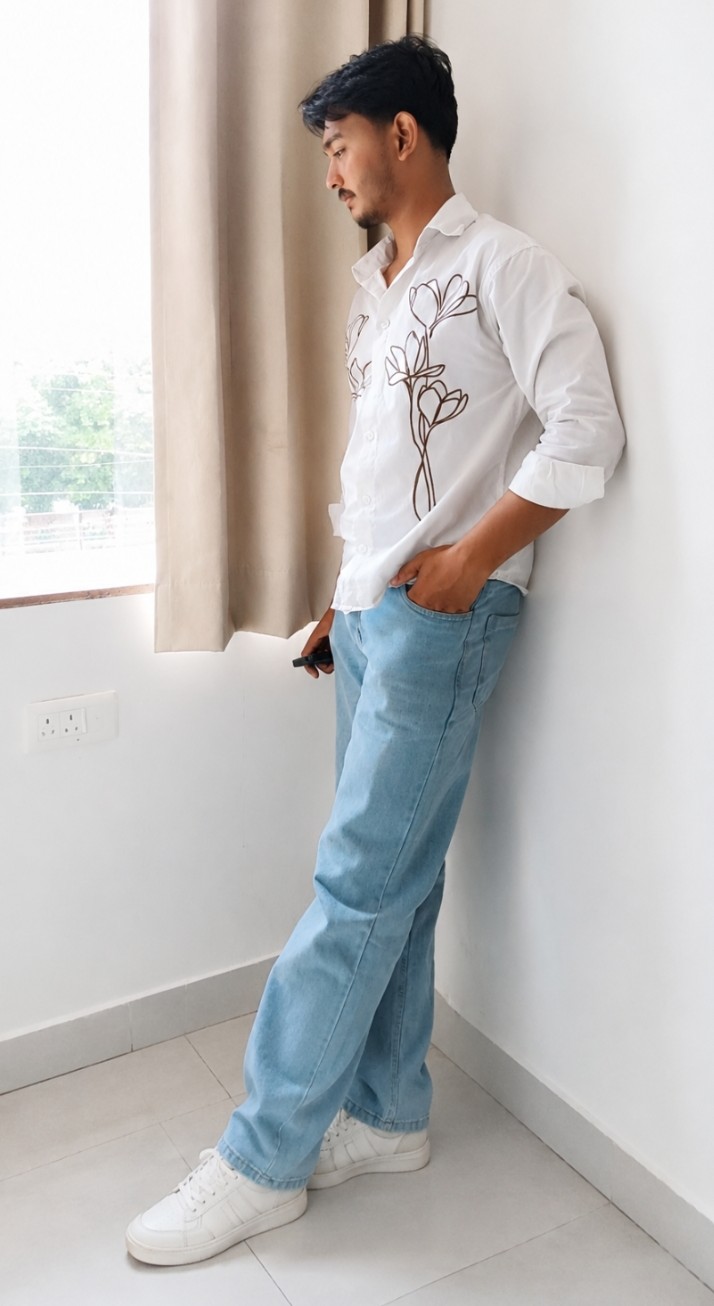
Himanshu Prajapati
In Kota
Rangbari and Swami Vivekanand Nagar, Kota
Teaches Science
- Experience
- 3+ yrs
- Fee
- ₹500/hr
CBSE tutors who make NCERT chapters stick and keep board answers sharp while entrance work fills the evenings.
 Guide by Abhinandan Tiwary with Aaditya Kashyap · Maths tutor · Class 10 CBSE and ICSE specialist
Real tutors first; sample profiles are marked. We suggest suitable tutors, and you meet one at a free demo class.
View all tutors →
In Kota
Rangbari and Swami Vivekanand Nagar, Kota
Teaches Science
In Kota
Kota
Teaches Maths
In Rajasthan
Jodhpur
Teaches Maths · Physics · Science
In Rajasthan
Jaipur
In Rajasthan
C-Scheme, Bani Park & Vidhyadhar Nagar, JHOTWARA
Teaches Maths
Tutors who join go through an ID check. Tell us the class, board and your area: we share two or three matched tutors, each with their fee, and the first class is a free demo, at home or online.
Book a free demo classAcross NXTutors, most home-tuition sessions fall between ₹800 and ₹2,500 an hour; Classes 11–12, IB/IGCSE and JEE/NEET sit toward the upper end; specialists for IB HL or JEE Advanced can charge more. Tutors set their own fee, and you see each tutor's fee before the demo class.
Monthly example: 3 one-hour classes a week ≈ ₹9,600–₹32,500 a month (12–13 classes at ₹800–₹2,500 an hour). An example, not a quote: your tutor's own fee decides the real figure.
See a monthly example and why one-to-one tuition costs more →
NXT AI can make mistakes. Please verify important details. Continue on WhatsApp
In Kota, plenty of CBSE students in Classes 11 and 12 also attend a coaching class, and younger ones often follow a school day that ends with a long list of homework. A CBSE home tutor is worth the fee when the job is specific: making sure NCERT chapters are understood rather than skimmed, practising the competency questions CBSE now sets, and keeping written board answers sharp while entrance work fills the evenings. This page sets out what CBSE asks for at each stage, the 2026–27 changes in Classes 9 and 10, how senior subjects are marked, how CBSE differs from the Rajasthan board, and how tutors reach different parts of Kota. Class 10 maths guidance on this page comes from Abhinandan Tiwary, who teaches Class 10 CBSE and ICSE maths, and science guidance from Aaditya Kashyap, who teaches CBSE and ICSE science.
Kota students sit several boards: the Board of Secondary Education, Rajasthan (RBSE), CBSE, CISCE's ICSE and ISC, and international programmes. We do not publish shares for each, because we do not have reliable figures. What matters for tuition is the difference between the first two.
The overlap is larger than many parents expect. For the 2026–27 session, RBSE prescribes NCERT books, published under copyright, for subjects such as mathematics and physics, so a CBSE tutor already knows the chapters an RBSE student reads. The papers are another matter. CBSE publishes sample papers and marking schemes on cbseacademic.nic.in every year and builds roughly half of each secondary paper around competency questions. RBSE has its own model questions, its own sessional scheme and, in Class 12 science, a theory part of 56 marks plus 14 sessional with a practical of 30. A tutor who teaches one board should show that they know the other's paper before taking on a student who switches. Our Rajasthan board tutors in Kota page covers RBSE in detail.
| Class | Who sets the paper | Common sticking point | Where tuition helps |
|---|---|---|---|
| 6 to 8 | The school | Fractions, negative numbers, reading a science paragraph carefully | Repairing basics and writing out working |
| 9 | The school, 80-mark annual paper with 20 internal | Algebra and science both get harder at once | Regular chapter tests; a decision on the Advanced paper |
| 10 | CBSE, 80 plus 20 school-assessed | Case-based questions; neat, complete answers | Sample papers marked against the official scheme |
| 11 | The school | The steep start in physics, chemistry and maths, often as coaching begins | Firm foundations before the board year |
| 12 | CBSE, theory with practical or internal marks | Revising the whole syllabus while entrance tests continue | One plan covering both |
At Class 10 each subject needs 33% to pass. Trouble that seems to appear "suddenly" in Class 9 algebra usually began with fractions or early equations in Classes 6 to 8, which is why tuition at that age should repair before it races ahead.
Every Class 9 student takes a common 80-mark paper in maths and another in science. In addition, a student may choose an Advanced paper worth 25 marks in maths, science, both or neither. Every question on it is higher-order and based on extra content. Those marks sit apart from the aggregate, though the marksheet notes any score of 50% and above. The old split into Basic and Standard maths is ending; students in Class 10 during 2026–27 are the final group to take it. For maths, treat Advanced as a choice for a student who already enjoys the subject, not as a way to fix weaknesses.
Class 10 now has two board examinations. The first is compulsory for everyone. A student who passes may sit the second to improve marks in up to three of science, mathematics, social science and the languages. Plan for the first as the real exam; the second is a safety net, not a strategy.
| Subject (code) | Theory | Practical or internal |
|---|---|---|
| The three sciences: Physics 042, Chemistry 043 and Biology 044 | 70 marks | Practical work worth 30 |
| Mathematics 041, or instead Applied Mathematics 241 (a student takes one) | 80 marks | Internal assessment worth 20 |
| Commerce papers: Accountancy 055, Business Studies 054, Economics 030 | 80 marks | Internal assessment worth 20 |
In the board year the paper draws on the entire Class 12 syllabus, and CBSE has signalled that senior papers will put more weight on applying ideas to real situations. The paper design arrives each year with the sample paper, so check that the tutor is working from the current one. For the board year, our guides to Class 12 physics, organic and inorganic chemistry and calculus and algebra are a useful start.
About half of each CBSE secondary paper is competency-based: a case or source passage, a table of data, or a real-life situation, followed by questions that test whether the idea can be applied. Students who know the textbook well can still lose marks here, because the first job is reading. In science, a good habit is to spend part of each session on one such passage: underline what is given, name the concept it points to, and only then write. In maths, the same habit means translating a word situation into an equation before touching any numbers. NCERT exemplar problems and CBSE's own sample papers are the right material; generic worksheets rarely imitate the style closely enough.
The entrance syllabus rests on the same NCERT content as the CBSE board, so careful school work helps both. The gap that shows up in Class 12 is usually in writing: after months of quick objective answers, students forget to show steps, units and labelled diagrams. A CBSE tutor working beside coaching should keep a list of NCERT chapters the class covered quickly and return to them with board-style questions, set at least one fully written answer in every session, and keep an eye on the practical file and internal work, which a coaching class does not track. For the entrance side, see JEE home tutors in Kota and NEET home tutors in Kota.
For Classes 9 and 10, two shorter sessions a week usually achieve more than one long weekend sitting. A sound session has three parts. It opens by going over whatever went wrong in the latest school test, starting from the NCERT explanation. It moves to one new idea, practised first with textbook exercises and then with an exemplar or competency question on the same idea. It closes with one answer written in full and marked line by line for steps, units, diagrams and presentation. If your child thinks in Hindi but writes the paper in English, the tutor can explain in Hindi and still require the written answer in clear English. Ask for a short monthly note listing chapters covered, test marks and mistakes that keep returning.
The CBSE board hub explains the board in more depth, and Class 10 maths preparation sets out an order for the board year.
The zone pages for Central Kota, North Kota and Rangbari and Swami Vivekanand Nagar add timing tips, and the Kota home tuition guide covers the whole city.
A tutor at the table suits younger children, anyone who drifts on a screen, and subjects where each line of working matters: maths, physics numericals, chemical equations and accountancy formats. Online suits a short doubt session on a class day, a senior subject whose right tutor lives on the far side of the city, and families in the north whose specialist lives in the southern colonies. Many families use the same tutor for both. Our online tutors for Kota page and the home versus online comparison explain the trade-offs.
You receive two or three matched tutors, see every fee beforehand, take the first class free, and can switch later at no cost. Tutors who join go through an ID check; the Verified badge appears only after our team has reviewed the ID (how we check tutors).
Across NXTutors, most home-tuition sessions fall between ₹800 and ₹2,500 an hour; Classes 11–12, IB/IGCSE and JEE/NEET sit toward the upper end; specialists for IB HL or JEE Advanced can charge more. For a CBSE student in Kota, the class, the number of subjects, sessions per week and the tutor's journey decide where a fee lands. See the pricing guide and home tuition fees in Kota.
Share the class, subjects, your colony or sector, the language your child is comfortable in and the free slots, and book a free demo. Browse tutor profiles, see every locality on the Kota home tutors page, or, if you teach CBSE, look at tuition jobs in Kota.
Send us the class, the subjects, your colony or sector, the language your child is comfortable in and your free slots. We shortlist two or three CBSE tutors who can reach you, show each fee before you book, and the first class is a free demo. Switching tutor later costs nothing.
The books overlap: for 2026–27 the Rajasthan board prescribes NCERT books for subjects such as mathematics and physics. The papers differ. CBSE publishes sample papers and marking schemes every year and builds about half of each secondary paper around competency questions, while RBSE uses its own model questions and sessional scheme.
Often, yes. Coaching trains quick objective answers, but the board wants full written answers from NCERT, plus practical and internal work. A tutor who revisits chapters the class rushed, sets a written answer every session and watches the practical file protects board marks without clashing with the class.
From 2026–27 all Class 9 students sit common 80-mark maths and science papers and may add a 25-mark Advanced paper in either or both. It contains only higher-order questions on extra content. Its marks stay outside the aggregate, and a score of 50% or more is recorded on the marksheet.
Yes. Under CBSE's notification, every Class 10 student sits the first board exam. A student who passes may take the second to improve marks in up to three of science, mathematics, social science and the languages. Prepare for the first as the main exam and treat the second as a back-up.
Tutors travel across Talwandi and Mahaveer Nagar, Dadabari and Vigyan Nagar, Rangbari and Swami Vivekanand Nagar, Central Kota and North Kota. We start with tutors on your side of the city and add online options for senior specialists. Share your colony or sector and a landmark the tutor can find.
Across NXTutors, most home-tuition sessions fall between ₹800 and ₹2,500 an hour; Classes 11–12, IB/IGCSE and JEE/NEET sit toward the upper end; specialists for IB HL or JEE Advanced can charge more. Each tutor sets their own fee, and you see it before the free demo.
Tell us the class, board and your area. We share two or three matched tutors, and the first class is a free demo.
