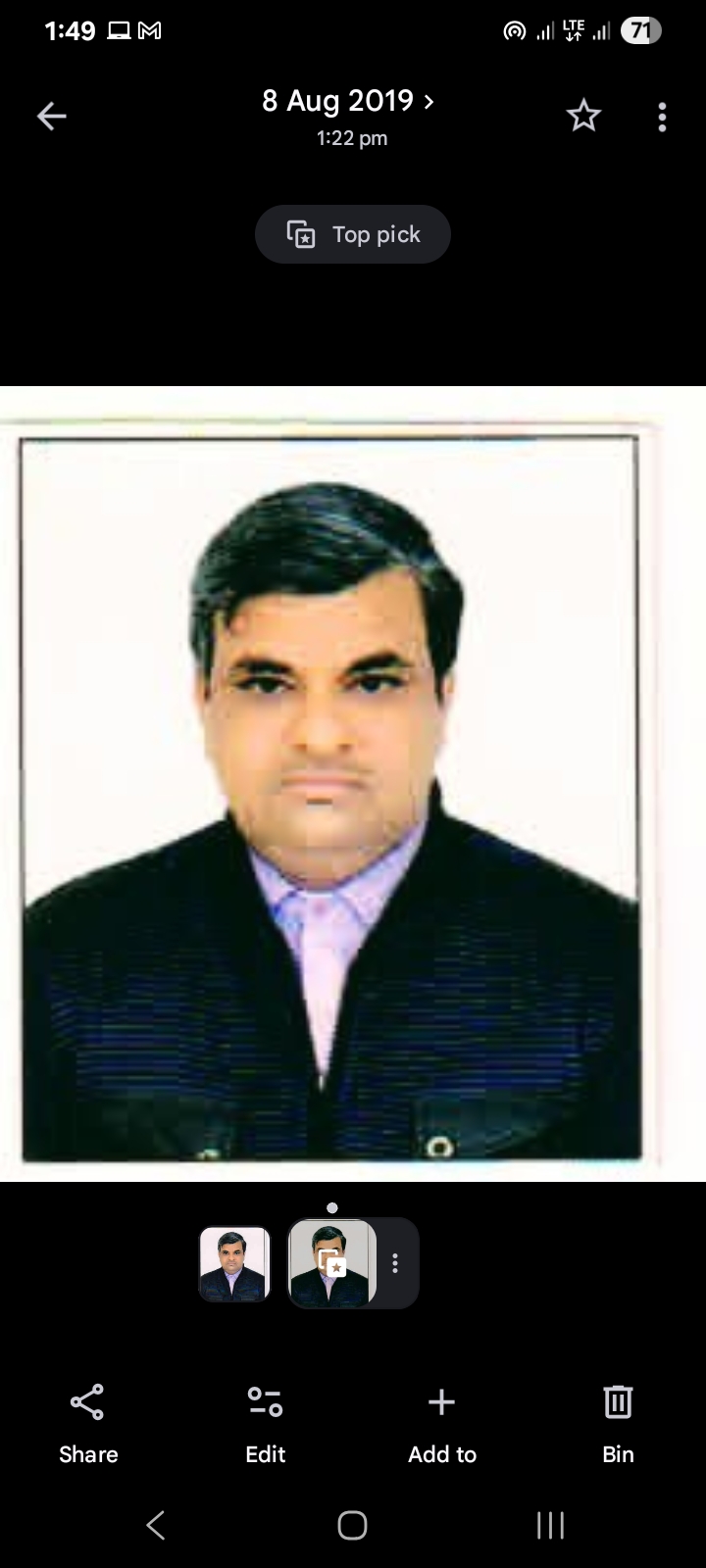
Amit Kumar Gupta
In Uttar Pradesh
Lucknow
Teaches Physics · JEE
- Experience
- 15+ yrs
- Fee
- ₹10,000–₹12,000/hr
Physics tutors across Aligarh for the board years and entrance preparation, at home or online.
 Guide by NXTutors Academic Team · Subject tutors and editors at NXTutors
Real tutors first; sample profiles are marked. We suggest suitable tutors, and you meet one at a free demo class.
View all tutors →
In Uttar Pradesh
Lucknow
Teaches Physics · JEE
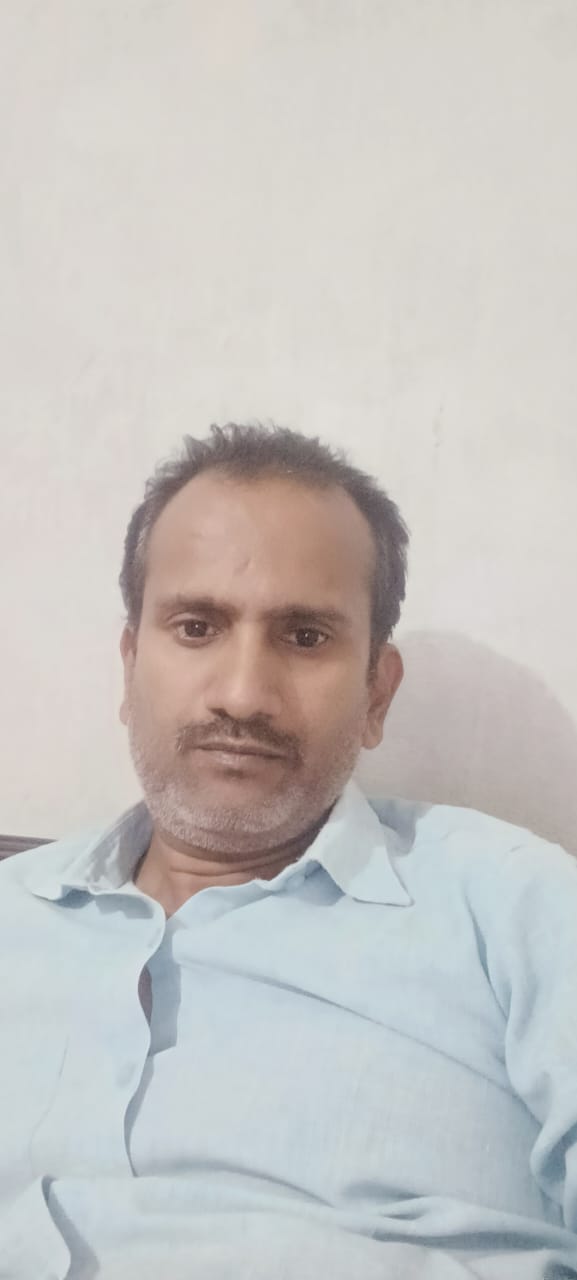
In Uttar Pradesh
Sahibabad & Rajendra Nagar, Ghaziabad
Teaches Maths · Physics
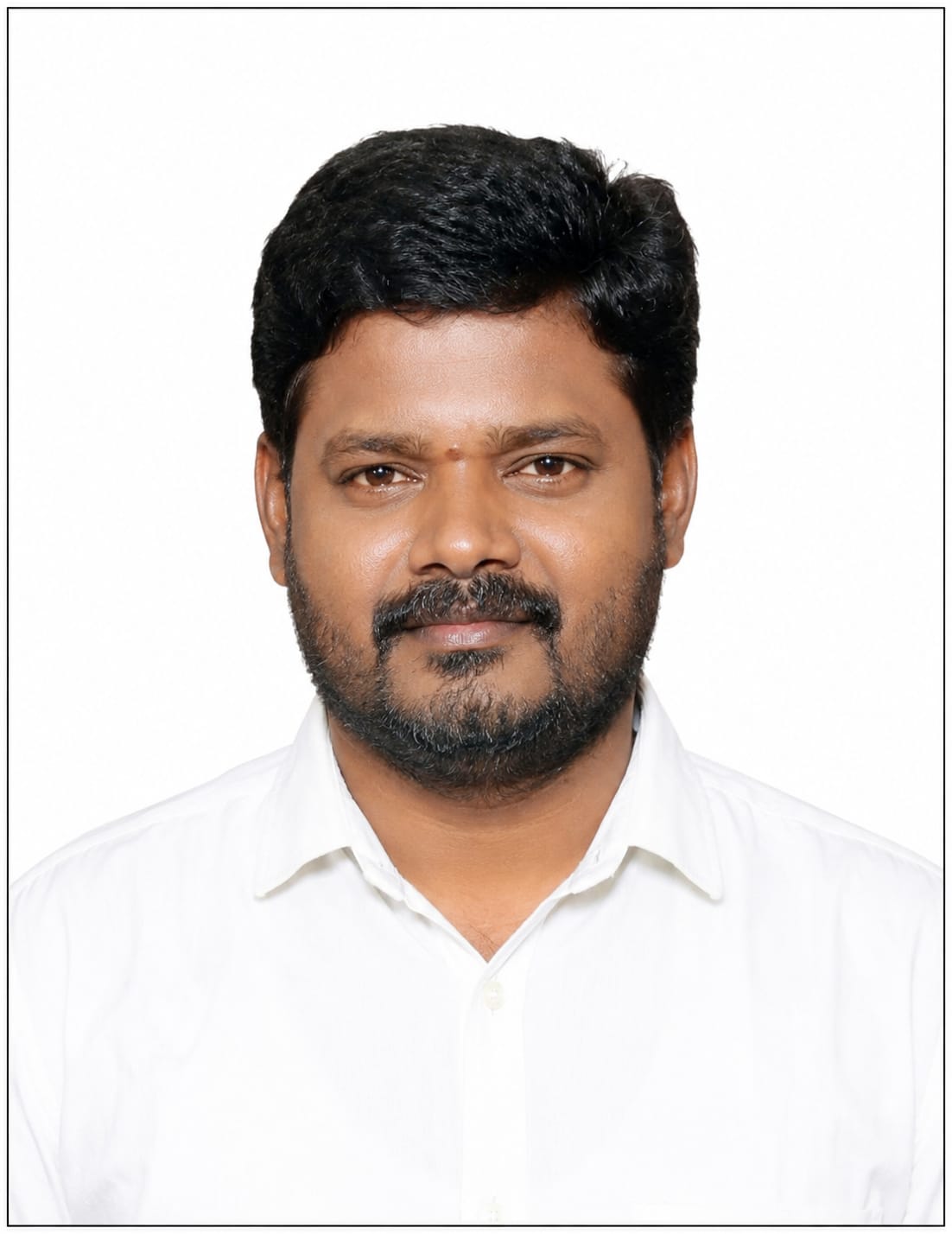
From Vijayawada · online
Vijayawada
Teaches Physics
From Jeddah · online
Jeddah
Teaches Physics
From Delhi · online
Delhi
Teaches Physics
From Salem · online
Salem
Teaches Maths · Physics · Science
From Gurugram · online
Gurugram
Teaches Maths · Physics
From Shivamoga · online
Shivamoga
Teaches Physics
Tutors who join go through an ID check. Tell us the class, board and your area: we share two or three matched tutors, each with their fee, and the first class is a free demo, at home or online.
Book a free demo classAcross NXTutors, most home-tuition sessions fall between ₹800 and ₹2,500 an hour; Classes 11–12, IB/IGCSE and JEE/NEET sit toward the upper end; specialists for IB HL or JEE Advanced can charge more. Tutors set their own fee, and you see each tutor's fee before the demo class.
Monthly example: 3 one-hour classes a week ≈ ₹9,600–₹32,500 a month (12–13 classes at ₹800–₹2,500 an hour). An example, not a quote: your tutor's own fee decides the real figure.
See a monthly example and why one-to-one tuition costs more →
NXT AI can make mistakes. Please verify important details. Continue on WhatsApp
Senior physics punishes small gaps. A sign dropped in electrostatics, a ray drawn without an arrow, a unit left off in the last line: each one costs marks in the board paper and again in an entrance test. Students in Aligarh usually have a full week of school and self-study already, and what they rarely get is an adult who sits beside them, reads their own attempt and shows exactly where it went wrong. That is the job of a home physics tutor. Tell NXTutors the board, the target exam and your colony, and we put forward two or three physics tutors who teach that combination and can manage the trip at a realistic hour. Fees appear on the shortlist first; the opening lesson is free, as a demo.
The chapters overlap a great deal; the marking does not. Decide which paper matters most this term, because that choice shapes the practice a tutor sets each week.
| Paper | How it is built | Scoring | Practice it needs |
|---|---|---|---|
| UP Board Intermediate physics (Class 12) | A 70-mark paper in two parts of 35, plus 30 for practicals | Pass needs 23 in the paper and 10 in practicals | Written answers with diagrams, in the medium of the exam |
| CBSE Class 12 physics (042) | 70 in theory over 33 compulsory questions; 30 in practicals | Written answers, constants given, no calculator | Derivations, labelled figures and case-based items |
| JEE Main, as set in 2026 | 25 physics questions: 20 with options, 5 needing a numerical answer | +4 right, −1 wrong | Multi-step problems, each error reviewed afterwards |
| NEET (UG), as set in 2026 | A pen-and-paper test; physics is 45 of its 180 questions, 180 of 720 marks | +4 for each correct answer, −1 for each wrong one | Exact NCERT statements, and the discipline to leave a doubtful question |
NTA, not the school board, decides what the entrance tests cover, and a chapter a board has cut can still be examined there. Before your child drops anything, compare it with this year's bulletin on nta.ac.in. Planning help: our topic-by-topic JEE physics plan, a short piece on NEET physics chapters that repay extra hours, and the Aligarh pages for JEE and NEET home tutors.
The UP Board's 2026-27 Intermediate physics syllabus divides the 70-mark paper into two halves of 35, and the practical exam adds 30. Theory and practical are passed separately. Optics is the single largest unit, but the electricity and magnetism chapters of Part A together outweigh it easily:
| Part A (35) | Marks | Part B (35) | Marks |
|---|---|---|---|
| Electrostatics | 8 | Optics | 13 |
| Magnetic effect of current and magnetism | 8 | Atoms and nuclei | 8 |
| Electromagnetic induction and alternating current | 8 | Electronic devices | 8 |
| Current electricity | 7 | Dual nature of radiation and matter | 6 |
| Electromagnetic waves | 4 |
The board's model paper gives three hours after a reading period, carries 70 marks in five sections and is set in Hindi. For a Hindi-medium student, the tutor should practise the textbook's Hindi terms in written answers, even if a derivation is first talked through in English or Urdu. A student switching to English medium needs the reverse: English terms written from the first week. Our UP Board tutors in Aligarh page covers the board as a whole.
Class 11 uses the same frame: a three-hour paper of 70 in two halves, and 30 for practicals. Part A is mechanics almost entirely: kinematics 6; laws of motion, work-energy-power, rigid bodies and systems of particles, and gravitation 7 each; and a single mark for the physical world and measurement. Part B takes bulk matter and oscillations and waves at 10 each, thermodynamics at 9 and kinetic theory of gases at 6.
Vectors, graphs and free-body diagrams learnt in this year come back in every Class 12 chapter and in every entrance problem. A term spent getting mechanics right is far easier than repairing it in the board year. The Class 11 physics tutor page and our stream choice guide help families at this point.
The 2026-27 sample paper follows the previous design. Electrostatics, current, magnetism, induction and alternating current, taken together, are worth 33 of the 70 theory marks. Light and electromagnetic waves are worth 18. Dual nature, atoms and nuclei bring 12, and semiconductors 7, with transistors and logic gates removed from the course, so throw out older notes that still teach them.
The paper has 33 questions over Sections A to E: sixteen single-mark items first (twelve with options, four assertion–reason), then five two-mark and seven three-mark questions, two four-mark case studies and three five-mark long answers. Close to two-fifths of the marks, roughly 38%, come from recall. The paper prints the constants you need; calculators stay at home. The derivations that keep coming back are gathered in our Class 12 physics strategies, and the Class 12 physics tutor page outlines a board-year plan.
Quite a lot, although the apparatus never leaves school. CBSE splits its 30 like this: 14 for two experiments, 5 for the viva, 5 for the record, and 3 each for an activity and the investigatory project. The record has to contain eight or more experiments and six or more activities, split evenly between the two sections, along with the project report. UP Board practicals also total 30, with a separate pass mark of 10.
What a tutor can do at the dining table: read each record entry the week it is written, rehearse precautions and likely sources of error, and fire off viva questions. Why repeat a reading? What does the slope of this graph mean? Why keep a galvanometer's deflection within range? A record written steadily all year is far calmer than one finished in a rush.
The fastest way to judge progress is to look at how a student sets out a solution. Ask the tutor to insist on the same four steps until they become automatic:
Alongside, start an "error notebook". Each entry holds the original question, the attempt exactly as written, a single line naming what went wrong, and a fresh solution done a few days later. Put this notebook, or two recent test papers, on the table at the free demo: a tutor worth hiring will leaf through it and name your child's weak step within minutes.
Class 11 and 12 lessons tend to drift into the evening, and a slot only survives the year if the tutor's journey is simple. Six colonies on the north and east side show what to send ahead; tutors for every locality are on our Aligarh page.
| Colony | Homes | Guiding the tutor in | Timing tip |
|---|---|---|---|
| Civil Lines | Older houses on wide lanes and newer apartment blocks | Lane or colony name inside Civil Lines, with a crossing that shows on a phone map | Weekend mornings suit longer revision before tests |
| Marris Road | Flats on upper floors and independent houses; colonies such as Durga Badi and Vidya Nagar open off it | Building, wing and floor for a flat; for a house, the nearest well-known shop | The road is busy by day, so an after-dinner hour often holds |
| Jamalpur | Family houses, many a little way off the main road | Mohalla name, house number, and where a two-wheeler can stand | Late afternoon is often the easiest window |
| Ramghat Road | Shops and offices on the road, homes on the side lanes | Which stretch: city end, middle or Quarsi end, plus colony and gali number | Early evening, with online sessions on late school days |
| Swarn Jayanti Nagar | Houses and apartment buildings off Ramghat Road | Block or house number and the nearest turn from Ramghat Road | A fixed slot before dinner suits most homes |
| Janakpuri | Family housing on short lanes beside Surendra Nagar and Ramesh Vihar | Which side of Janakpuri, the lane or block, and the easier way in | Weekdays after school; Sunday mornings for doubts |
On a day when school keeps your child back, the same tutor can take that lesson online instead. The Civil Lines and Medical Road zone page has more local advice.
Specialists for these courses are scarcer in the city, so mention the course in your first message; an online tutor can take the course work while a local tutor checks written practice.
Across NXTutors, most home-tuition sessions fall between ₹800 and ₹2,500 an hour; Classes 11–12, IB/IGCSE and JEE/NEET sit toward the upper end; specialists for IB HL or JEE Advanced can charge more. Every tutor names their own fee, which you see before the demo. Three questions make the comparison fair: which exam has the tutor prepared students for in the last year, what is the latest hour they can arrive, and can one session a week be held online? The Aligarh home tuition fees guide adds more.
Give us the class, the board, the main goal (board paper, JEE or NEET), the exam's language, your colony with a landmark and the evenings that are free. A shortlist of two or three physics tutors comes back, fee beside each, and you invite one for the free demo. If it is not the right fit, a second demo follows, and changing tutor later is free. If the evening you need is beyond every nearby tutor, we will tell you and set up online or mixed lessons instead. Tutors who join go through an ID check; the Verified badge appears only after the ID check is complete (how the ID check works).
Our team works from Sector 66, Gurugram, and online lessons reach any city. Read how matching works on the national physics home tutor page, or compare our physics tutors in Lucknow, and the Aligarh maths and chemistry pages. Physics teachers in Aligarh can see families looking for a tutor on the Aligarh tuition jobs page; joining is free.
Across NXTutors, most home-tuition sessions fall between ₹800 and ₹2,500 an hour; Classes 11–12, IB/IGCSE and JEE/NEET sit toward the upper end; specialists for IB HL or JEE Advanced can charge more. Aligarh physics tutors name their own fees, shown before the free demo. Ask which exam they taught last year and how late they can come.
Send the class, board, main goal (board paper, JEE or NEET), the language of the exam, your colony with a landmark and the free evenings. We reply with two or three matched physics tutors and their fees. The first class is a free demo, a second demo follows if the fit is wrong, and switching tutor later is free.
UP Board Class 12 physics is a 70-mark paper in two parts of 35, plus 30 marks of practicals, passed separately with 23 and 10. Optics is the largest single unit at 13, while electrostatics, magnetism and induction with AC bring 8 each. The model paper gives three hours after a reading period and is set in Hindi.
Because Class 11 mechanics feeds every later chapter and every entrance problem. Part A of the UP Board Class 11 paper is almost all mechanics: kinematics 6, and laws of motion, work-energy-power, rigid bodies and gravitation 7 each. Part B gives bulk matter and oscillations and waves 10 each, thermodynamics 9 and kinetic theory 6.
CBSE Class 12 physics sets 33 compulsory questions for 70 theory marks in five sections. Section A has sixteen one-mark items, B five two-mark, C seven three-mark, D two four-mark case studies and E three five-mark long answers. Electricity and magnetism carry 33 marks, constants are printed and calculators are not allowed.
Yes, a home tutor can prepare much of the practical even though experiments happen at school. In CBSE, two experiments carry 14 marks, the record 5, the viva 5, and an activity and project 3 each. UP Board practicals are also 30 with their own pass of 10. A tutor can check record entries and run mock vivas.
Only if your child is sitting them, and you should say so in the request. JEE Main 2026 had 25 physics questions, 20 with options and 5 numerical, at +4 and −1. NEET 2026 had 45 physics questions out of 180. NTA can keep topics a board has cut, so check nta.ac.in before dropping chapters.
For a flat on Marris Road, send the building name, wing and floor; for a house, the house number and the nearest well-known shop on the road. Marris Road carries a lot of daytime movement, so a lesson after the evening meal or early on a Sunday is often easier to keep through the year.
Yes, the same tutor can take a lesson online when school keeps your child back or a test runs late. Many families keep home visits for derivations and the practical record, and move one session a week online. Specialists for ISC, IB or IGCSE physics are often easier to find online.
Tell us the class, board and your area. We share two or three matched tutors, and the first class is a free demo.