
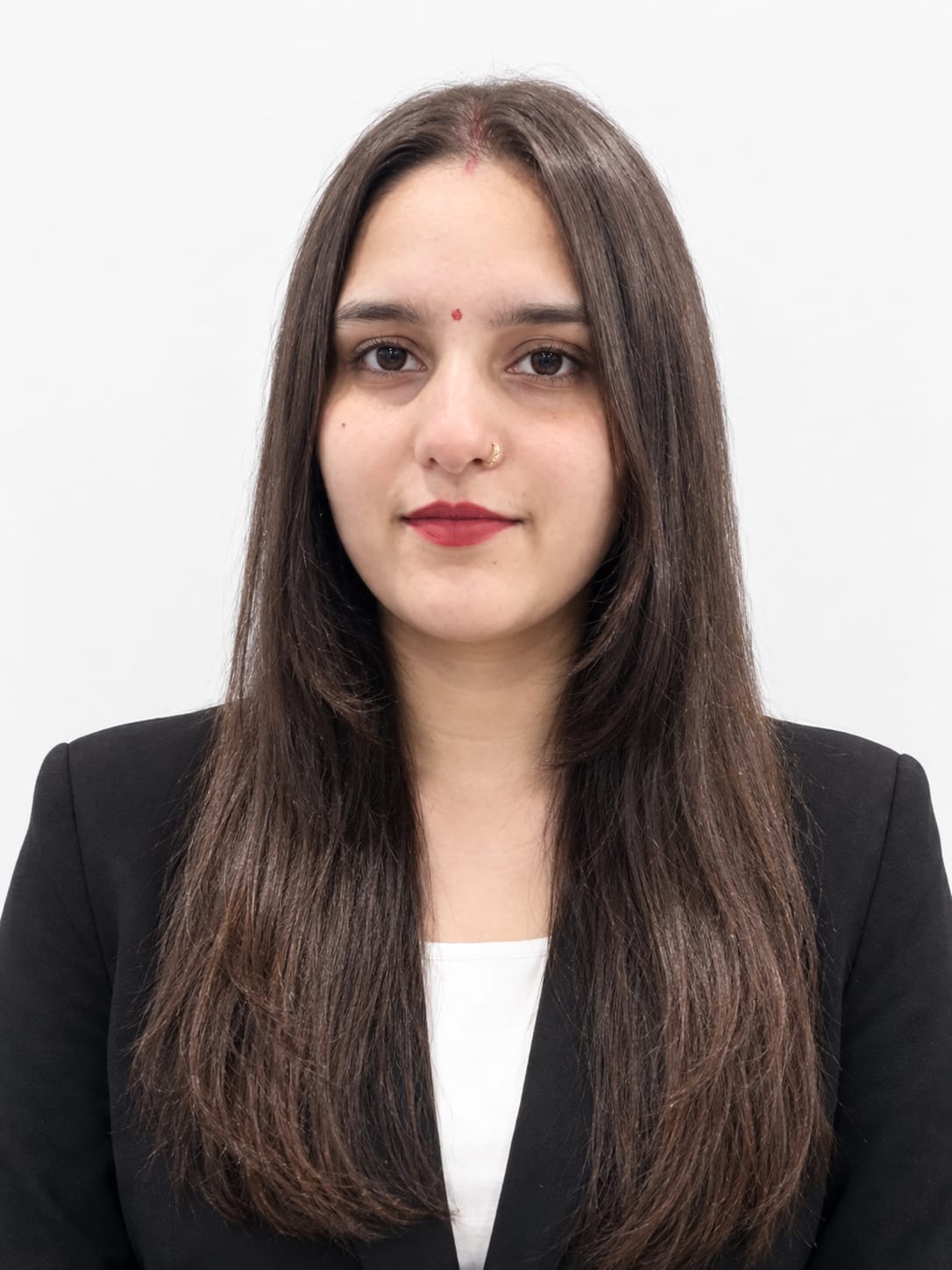
Ishika Kansal
From Sangrur · online
Sangrur
Teaches Accountancy · Economics
- Experience
- 2+ yrs
- Fee
- ₹34/hr
Accountancy tutors across Bengaluru for PUC, CBSE, ISC and Cambridge commerce, at home or online, with a free demo class.
 Guide by NXTutors Academic Team · Subject tutors and editors at NXTutors
Real tutors first; sample profiles are marked. We suggest suitable tutors, and you meet one at a free demo class.
View all tutors →From Sangrur · online
Sangrur
Teaches Accountancy · Economics
From Rewari · online
Rewari
Teaches Accountancy
From Coimbatore · online
Coimbatore
Teaches English · Accountancy
Tutors who join go through an ID check. Tell us the class, board and your area: we share two or three matched tutors, each with their fee, and the first class is a free demo, at home or online.
Book a free demo classAcross NXTutors, most home-tuition sessions fall between ₹800 and ₹2,500 an hour; Classes 11–12, IB/IGCSE and JEE/NEET sit toward the upper end; specialists for IB HL or JEE Advanced can charge more. Tutors set their own fee, and you see each tutor's fee before the demo class.
Monthly example: 3 one-hour classes a week ≈ ₹9,600–₹32,500 a month (12–13 classes at ₹800–₹2,500 an hour). An example, not a quote: your tutor's own fee decides the real figure.
See a monthly example and why one-to-one tuition costs more →
NXT AI can make mistakes. Please verify important details. Continue on WhatsApp
In Bengaluru, a Class 11 commerce student might be in first PUC under the Karnataka board, in a CBSE school using NCERT books, in an ISC school, or in a Cambridge programme where accounting began two years earlier. The debit-and-credit logic is the same everywhere; the paper, the project and the Class 12 options are not. This page sets out those differences for a Bengaluru family, explains how a tutor gets to each part of the city, and lists what to watch in the free demo. The full syllabus walk-through sits on our national accountancy home tutor guide.
Before we shortlist anyone we ask for the board and the exact course, because a tutor fluent in NCERT partnership questions may never have set out an IGCSE structured answer, and the reverse is just as common.
| Board and course | How it is assessed | Question for the tutor |
|---|---|---|
| Karnataka PUC commerce | Set by the state board for first and second PUC, with its own textbooks and papers | Have you taught from the current PUC accountancy textbook and the board's model papers? |
| CBSE Accountancy (055) | Three-hour, 80-mark theory paper and a 20-mark project in Class 11 and again in Class 12 | Which Class 12 Part B have you taught lately: analysis of statements or Computerised Accounting? |
| ISC Accounts (858) and Commerce (857) | Each an 80-mark, three-hour paper plus two projects of 10 marks, in both years | Have you prepared students for Section B or Section C in Class 12? |
| Cambridge IGCSE Accounting (0452) | One multiple-choice paper (40 marks) and one structured paper of five compulsory questions (100 marks); not tiered | How do you train the written analysis questions? |
| Cambridge AS and A Level Accounting (9706) | Four papers, with cost and management accounting as its own A Level paper | Have you taught the costing and budgeting paper? |
| IB Diploma | No separate accounting course; Business Management and Economics are the nearby subjects | Which Business Management unit does the student need help with? |
Business Studies (CBSE code 054) usually comes with accountancy in CBSE commerce. It is written and point-based, while accountancy is exact. Tell us if one of the two is the problem rather than both, since a specialist in the weaker subject is usually a better use of the budget than a generalist for both.
A large share of Bengaluru students finish the SSLC and continue under the Karnataka board into the two-year pre-university course. Commerce students there take accountancy as part of a combination of subjects chosen at admission. We describe this course only in general terms; the scheme of the paper and the timetable come from the board's own notices each year, and that is what a tutor should work from.
What we look for in a PUC accountancy tutor is practical. They should teach from the prescribed PUC textbook in the order your child's college follows, not from a CBSE guide that happens to share chapter names. They should practise with the board's model and past papers. And they should insist on the habits that every accountancy paper rewards, whichever board sets it: entries derived from the accounting equation rather than memorised, working notes for every adjustment, and formats built from understanding. When you send the request, say "first PUC" or "second PUC" and name the subject combination, so we do not send a CBSE-only tutor.
Both national boards split the last part of Class 12 accountancy into two routes, and the right tutor depends on which one your child's school teaches.
A tutor who is strong on ratios may be rusty on spreadsheet functions. Ask the class teacher which route the school follows before the demo, and tell us. For the CBSE Class 12 project, the student analyses a company's statements using any two of comparative and common size statements, ratios, segment reports or cash flow; a tutor can teach those tools and rehearse the viva, but the file has to be your child's own work.
Students applying to central and participating universities may sit CUET (UG). The NTA's 2026 bulletin lists Accountancy / Book Keeping as domain subject 301, with 50 compulsory questions in 60 minutes on the NCERT Class 12 syllabus. A CBSE student has already covered that content; a PUC or ISC student should ask the tutor to map their own chapters against NCERT's and fill any gaps. The extra skill is speed in a multiple-choice format, which is worth adding once the board syllabus is secure. Read the bulletin for your own year, since the NTA publishes a fresh one each cycle.
Accountancy needs steady weekly practice, so the travel has to work every week, not just for the demo. Families anywhere in the city can request a home tutor; where nobody suitable can make the trip reliably, online lessons widen the choice. The table shows the usual route into each zone.
| Zone | Usual way in | Good to know |
|---|---|---|
| Koramangala, HSR and Bellandur, e.g. HSR Layout | By road; the Outer Ring Road is the dividing line | Give the HSR sector with main and cross numbers; a tutor from your side of the ORR keeps to time |
| Jayanagar, JP Nagar and Banashankari, e.g. Jayanagar | Green Line, then a short walk or auto | Evening parking near the 4th Block shops is tight, so metro is easier |
| BTM, Bannerghatta Road and Electronic City, e.g. Electronic City | Yellow Line along Hosur Road; Bannerghatta Road by road for now | Avoid office shift changes; agree the station exit and auto point |
| Indiranagar and Old Airport Road, e.g. Indiranagar | Purple Line to Indiranagar; Baiyappanahalli for CV Raman Nagar | Start before the 100 Feet Road evening crowd |
| Whitefield, Marathahalli and KR Puram, e.g. Marathahalli | Purple Line plus an auto where a station is near | Some societies ask for photo ID on the first visit |
| Hennur, Kalyan Nagar and Banaswadi | No metro yet; two-wheeler, bus or cab | A tutor living close by keeps weekday classes regular |
| Hebbal, RT Nagar and Yelahanka, e.g. Yelahanka | By road along Bellary Road | Stay on your side of the Hebbal flyover; give the New Town stage or Old Town landmark |
| Malleshwaram, Rajajinagar and Yeshwanthpur | Green Line, most homes a walk or auto from a station | Chord Road and Tumkur Road are slow at peak hours |
| Vijayanagar, RR Nagar and Kengeri | Purple Line west, then a short auto | Share a map pin for the hilly Basaveshwaranagar streets |
| Frazer Town, Richmond Town and Ulsoor | Purple Line to Halasuru or Trinity for Ulsoor; road or metro and auto elsewhere | Guards at many entrances; send the tutor's name ahead |
The east Bengaluru and south Bengaluru tuition guides add commute and timing notes, and every neighbourhood is listed on our Bengaluru home tuition page.
Accountancy is written in columns on paper, and most mistakes show up in a single line of a ledger. A tutor at the table catches a wrong-side posting the moment it is made, which is why home lessons suit Class 11, when double entry is new. Online lessons work well when the tutor can see the notebook clearly through a phone on a stand or a writing tablet, and they are often better for Computerised Accounting or ISC Section C, where both people can work in the same spreadsheet.
For homes across the Outer Ring Road or in the farther apartment belts, a mix is common: the heavy chapters, such as partnership admission and retirement or final accounts with adjustments, at home at the weekend, and shorter online sessions for theory and doubts on weekdays. Online lessons also open tutors elsewhere in India for Cambridge A Level costing or an IB Business Management unit.
Keep the last marked accountancy test, the notebook and the current chapter's textbook on the table, then watch for these points:
Our demo class checklist for parents covers the practical side. If the fit is wrong, we arrange a demo with the next tutor on the shortlist.
Across NXTutors, most home-tuition sessions fall between ₹800 and ₹2,500 an hour; Classes 11–12, IB/IGCSE and JEE/NEET sit toward the upper end; specialists for IB HL or JEE Advanced can charge more. Each tutor sets their own rate, and the course, travel to your neighbourhood and lessons per week all play a part. You see every shortlisted fee before the demo. The Bengaluru home tuition fees guide and our pricing guide explain more.
Send us the board and year, the Class 12 route if known, the chapters causing trouble, your neighbourhood with block or stage, the times that suit and whether you want home, online or both. We reply with two or three matched tutors and their fees, your child takes a free demo class, and switching tutor later is free. Tutors who join go through an ID check before their profile is marked Verified.
Commerce students often need a second subject: see our economics home tutors in Bengaluru, maths tutors if maths sits in the combination, and English tutors. Board-wide help is on our CBSE and ICSE and ISC pages for Bengaluru. Still choosing a stream? Our Class 11 stream guide and Class 11 tutor page describe what commerce involves, though both were written with Gurugram families in mind. Accountancy teachers in the city can find open requests on Bengaluru tuition jobs.
Yes, on request. Say which PUC year and which subject combination your child takes, and we look for tutors who teach from the current PUC accountancy textbook and practise with the board's model papers. The paper scheme and dates should always be checked in the Karnataka board's own official notices.
Under the 2026-27 CBSE curriculum, the 80-mark paper gives 60 marks to Part A: partnership firms 36 and company accounts 24. The remaining 20 come from either financial statement analysis with the cash flow statement, or Computerised Accounting. A further 20 marks come from the project, split between the file and a viva.
Usually, yes. A tutor living a few Yellow Line stops away can ride in and finish by auto, so agree the station exit beforehand. Set the lesson away from office shift changes, and register the tutor with your society gate before the first visit so the class starts on time.
Often, if the tutor can see the notebook clearly through a phone stand or writing tablet. It suits theory revision, doubt clearing and the Computerised Accounting option especially well. Many families across the Outer Ring Road combine a weekend home lesson for heavy chapters with a shorter online session on a weekday.
The double-entry ideas are shared, but the exam is not. IGCSE Accounting 0452 has a 40-mark multiple-choice paper and a 100-mark structured paper of five compulsory questions, and it is not tiered. Ask for a tutor who has taught that syllabus by code, rather than one who knows only NCERT formats.
Two sessions a week suits most Class 11 and 12 students, rising to three near the board exams. Accountancy is procedural, so practising a method twice in a week works better than one long session. The tutor should suggest a pace after testing the basics in the first few lessons.
Across NXTutors, most home-tuition sessions fall between ₹800 and ₹2,500 an hour; Classes 11–12, IB/IGCSE and JEE/NEET sit toward the upper end; specialists for IB HL or JEE Advanced can charge more. Board, travel to your area and weekly frequency shape each fee, shown before the demo.
Tell us the class, board and your area. We share two or three matched tutors, and the first class is a free demo.
